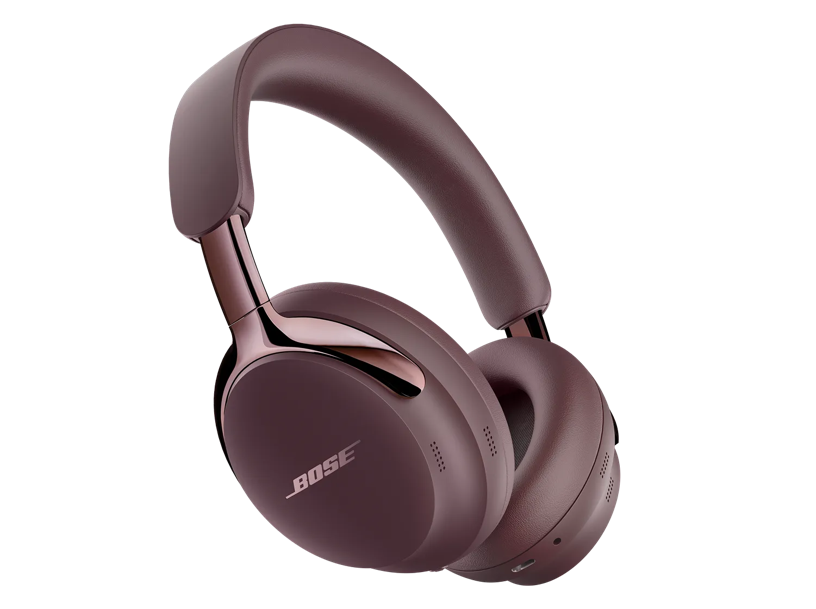
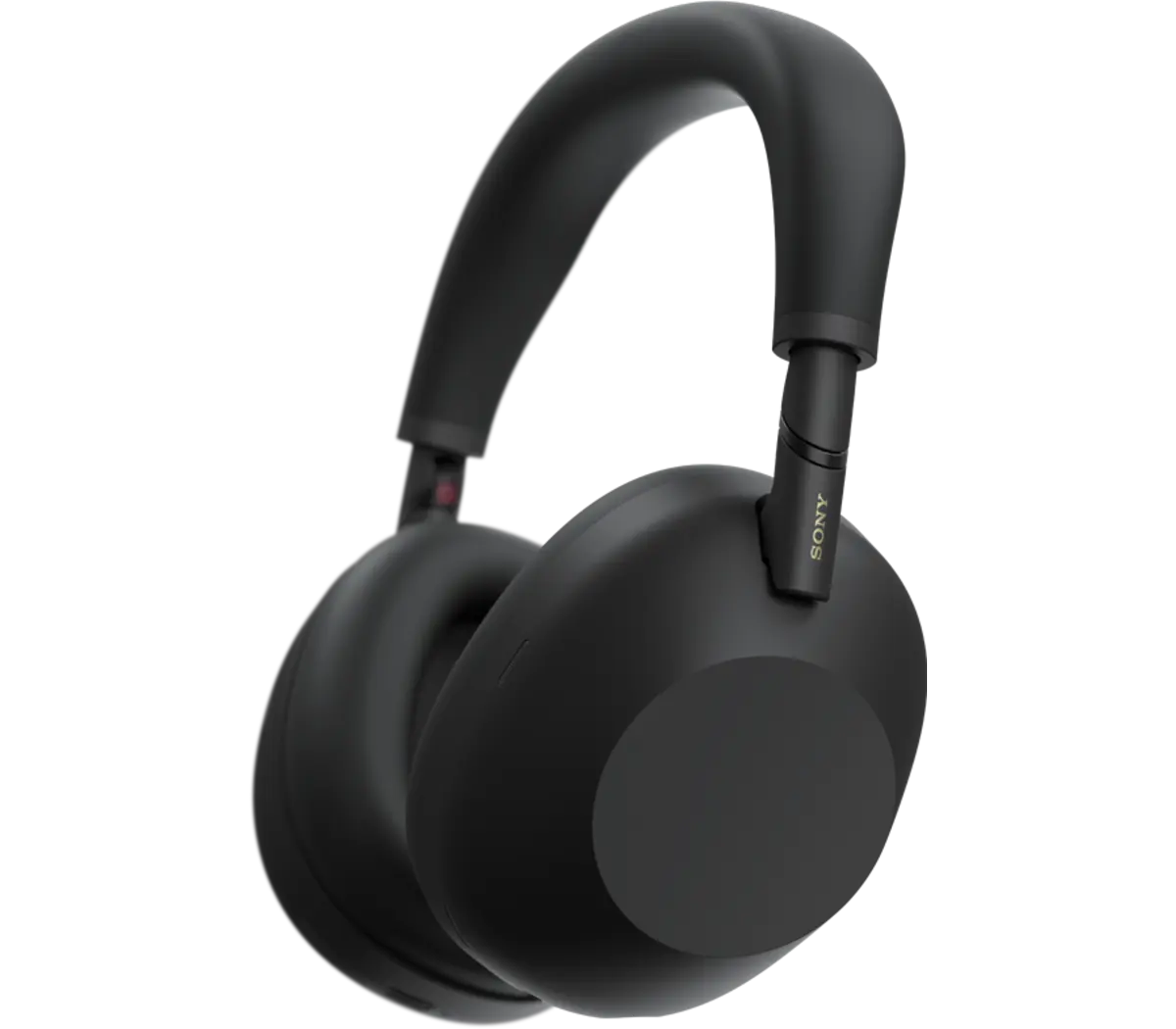
Choose the connection you need before judging the feature list
Sony WH-1000XM6 and Bose QuietComfort Ultra Headphones (2nd Gen) both offer wireless listening, noise-control features and multipoint. The clearest documented difference is what happens when you plug them in. Bose explicitly supports USB-C digital audio; Sony explicitly supports passive analogue listening.
DelaTechHQ has not physically tested either model. This comparison, checked on 4 October 2026, does not rank comfort, microphone clarity, sound quality or noise-cancellation strength. It answers a narrower and useful question: which connection and power arrangement better suits your day?
A computer desk favors one kind of cable
Bose's product FAQ specifies USB audio at 16-bit, 44.1kHz or 48kHz. With a suitable source, the same USB-C connection can provide audio and power. That is convenient if your computer has no analogue output or you want to avoid another audio adapter.
Do not extend that capability into unsupported claims about high-resolution formats or every conferencing application's microphone behavior. Check the input and output workflow separately. Sony's evaluated specification sheet lists USB charging and an analogue input, not equivalent USB digital-audio support; we do not infer audio support from its connector shape.
A depleted battery favors a different arrangement
Sony lists passive operation. That provides an analogue listening fallback with the headphones switched off, although active processing is a separate capability. For someone who wants to plug into an entertainment system after forgetting to charge, that distinction is useful.
Bose's manual explicitly requires the headphones to be powered on for analogue audio. A depleted battery therefore needs an external USB power source. The analogue cable also disables Bluetooth and earcup microphone pickup. This makes the cable suitable for a listening scenario, not an assumed wired call-headset replacement.
Wireless formats and two-device use
Sony lists SBC, AAC, LDAC and LC3. Bose documents Snapdragon Sound with compatible certified devices. Those feature names are not a sound-quality league table. Your phone, firmware, selected mode and connection conditions determine which options are available and useful.
Both support multipoint. Bose's manual makes clear that two connections do not mean two audio streams playing simultaneously. Think about source switching and incoming calls, especially when one device is an employer-managed laptop. A feature checkbox cannot establish how smoothly your particular routine works.
Battery headlines are not a controlled comparison
Sony claims up to 30 hours of music with noise cancellation on and 40 with it off. Bose claims up to 30 hours, with different endurance when Immersive Audio is used. These statements have manufacturer-specific conditions. They do not establish that the headphones last equally long on the same call, codec, volume and source.
Our comparison leaves actual endurance unranked. A reader preparing for a long journey should plan charging and a fallback connection rather than treating a maximum figure as a guarantee. For Bose that fallback may include a power source; for Sony passive listening changes the available processing.
Comfort, noise control and ownership
Fit should be tested with your own glasses and usual session length. Cushion pressure, heat and seal can change the experience enough to outweigh a connection advantage. We cannot establish those factors from product photographs.
Sony's guide says the headphones are not waterproof, and Bose's guide warns against rain and moisture. Neither is presented here as workout equipment. For long ownership, check local replacement-cushion and service options; this research does not invent repair prices or promise parts availability.
Why there is no universal winner
The CMS uses equal-weight preference rows: documented USB digital audio scores 5 versus 3 without verified support; passive analogue backup scores 5 versus 3 when power is required. Multipoint receives equal scores, and battery evidence receives equal neutral scores because the claims are not shared measurements. The result is Workflow dependent. These are workflow preference points, not sound or ANC test results.
Start with Bose if direct USB audio will simplify your computer setup. Start with Sony if battery-independent analogue listening is the more important fallback. If sound or comfort is decisive, use a trial or return window to resolve what this research cannot. Neither brand's promotional superlative substitutes for that evidence.
Read the Sony review, Bose review, their Sony and Bose product records, and Audio coverage. Sources: Sony specifications, Sony guide, Bose product FAQ and Bose manual. These are non-affiliate references.
Editorial Summary
Workflow dependent: Sony for passive analogue backup; Bose for documented USB-C digital audio.
Was this assessment helpful to your buying decision?
We aim to make every review clear, evidence-based, and useful. If you have a question or spot something we should improve, you can contact our editors below.