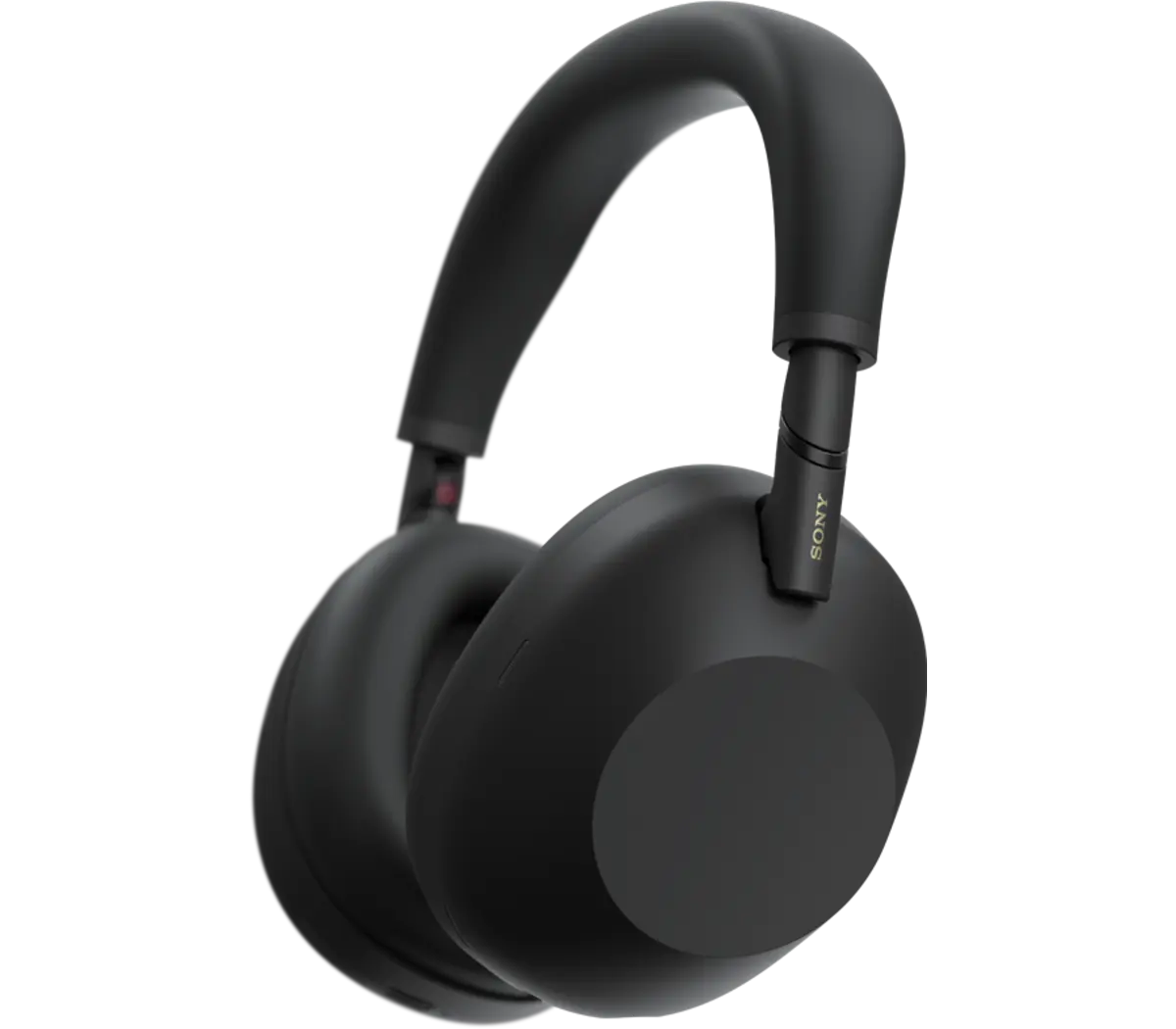
Flexible headphones for a phone-and-laptop routine
Sony WH-1000XM6 makes a documented case for someone who moves between wireless listening and a conventional wired source. Its combination of active noise cancellation, multipoint Bluetooth and passive analogue operation is more useful to evaluate than an unsupported claim that it sounds better than every rival.
This research-based review was checked on 4 October 2026. DelaTechHQ has not physically tested these headphones. We do not rank noise cancellation, microphone clarity, tonal balance or long-session comfort. Those require listening and fit evidence that a specification sheet cannot supply.
Key specifications
- Closed, over-ear design with a published weight of approximately 8.96oz.
- Bluetooth 5.3, multipoint connection, and SBC, AAC, LDAC and LC3 formats listed by Sony.
- Stereo mini-jack input and passive operation.
- USB charging; Sony lists approximately 3.5 hours for a full charge.
- Manufacturer music-playback maximum: 30 hours with noise cancellation on, or 40 hours with it off.
- Ambient sound mode and adaptive noise-cancellation controls.
These details come from Sony's specification page. Codec availability depends on the source device and connection mode; listing a codec is not a guarantee that your phone uses it.
Form factor and controls
The over-ear form is intended for listening with cushions around the ears. Actual comfort will depend on head shape, glasses and the seal, which we cannot judge remotely. A poor seal can also affect the listening experience, making a return policy and an opportunity to try the fit especially valuable.
Sony's help guide describes touch gestures for playback and volume, and the Sound Connect app for setup. Gesture-based operation may suit some users better than others. If you prefer tactile buttons or frequently adjust controls without looking, try the actual interaction rather than inferring usability from a feature list.
Wireless platform and practical connections
Multipoint is useful when the same headphones serve a phone and computer. It does not mean two independent audio streams are necessarily mixed together. Check the instructions for switching sources, especially if incoming calls interrupt your work.
The format list gives compatible sources several options. A high-resolution codec label alone does not establish audible improvement, and connection conditions can influence which mode is practical. Choose for the devices you actually own rather than buying for a codec your source cannot use.
The analogue cable is a valuable fallback. Sony explicitly lists passive operation, so wired listening is not wholly dependent on a charged battery. That does not preserve powered processing such as active noise cancellation when switched off. If your main requirement is digital audio through a laptop's USB-C socket, the Bose model in this pair has that feature explicitly documented; do not assume a charging port is also an audio input.
Battery and noise-control expectations
Sony's 30-hour noise-cancelling playback figure is a maximum under its conditions. It is not a promise for calls, every codec, every volume level or an aging battery. Compare the conditions as carefully as the headline when planning flights or long working days.
Ambient modes and adaptive processing add control over listening, but they do not prove how well voices, traffic or sudden sounds are handled. The product page documents the feature set; this review deliberately does not convert Sony's promotional superlatives into our own verdict.
Limitations and ownership checks
Sony states that the headset is not waterproof. It is therefore a poor purchase to justify primarily as wet-weather or exercise equipment. Also check the availability and cost of replacement cushions locally if you expect to keep it for several years; we have not verified those costs here.
A wired connection and wireless connection can expose different controls and microphone behavior. If the headphones are essential for work calls, confirm the exact cable and source workflow instead of assuming every input reproduces the Bluetooth experience.
Verdict and score
4/5: a strong documented choice for a commuter or desk user who values multipoint, format flexibility and passive analogue backup. The limits are the absence of verified USB digital-audio capability in our evaluated documentation and the lack of water protection. This is not a measured sound-quality or ANC score; a 5/5 claim would need stronger evidence of exceptional suitability.
Consider Bose if USB audio is central to your laptop workflow. Read the Bose review, Sony versus Bose comparison, Sony product record and Audio archive. Official reference links contain no invented affiliate tracking.
Pros
- Passive analogue listening fallback
- Multipoint connection
- Several documented Bluetooth formats
Cons
- Not waterproof
- USB digital audio is not verified in evaluated specifications
- Fit and ANC effectiveness require hands-on assessment
Verdict
4/5 for mixed phone-and-laptop listening: wireless options and passive backup are useful; water protection and USB audio needs require alternatives.
Alternatives
Consider these competing routes before buying if you need a different platform, budget, or feature set.
Price Comparison
No active retailer offers are available yet.
View Product DetailsWas this assessment helpful to your buying decision?
We aim to make every review clear, evidence-based, and useful. If you have a question or spot something we should improve, you can contact our editors below.