
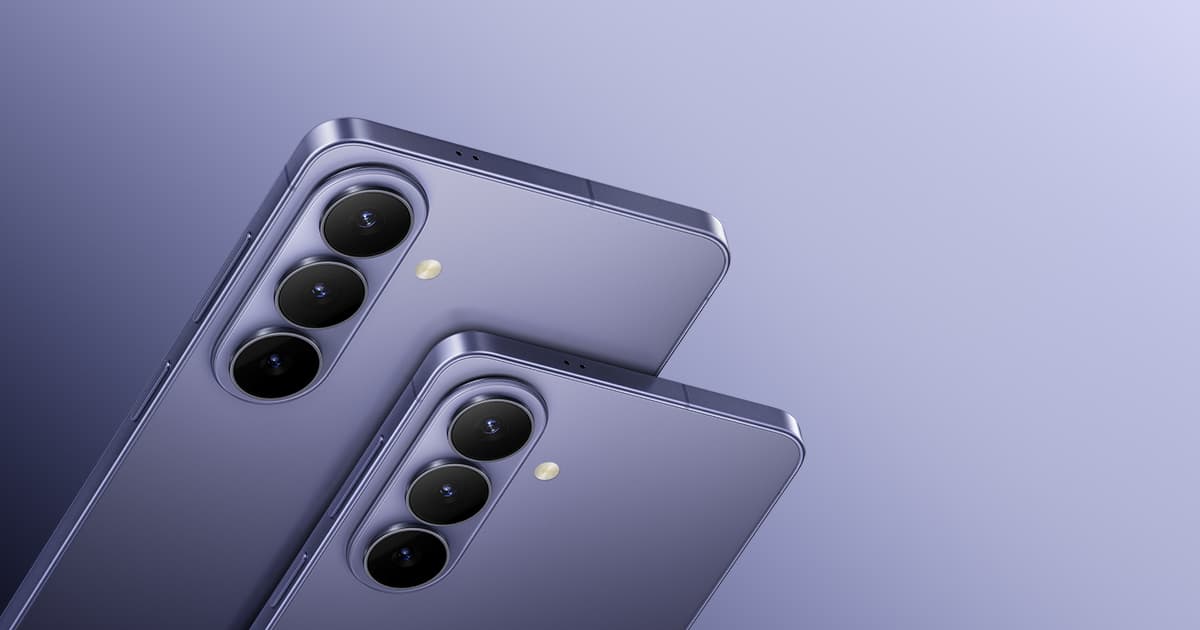
Start with the camera distance and charging routine
Galaxy S26 and Pixel 11 are current mainstream Android phones with similarly sized displays, but they offer different reasons to buy. Samsung's documented form factor and 3x telephoto suit one set of preferences; Google's 5x telephoto and magnetic wireless charging suit another. Neither specification sheet establishes a universal camera or performance winner.
This comparison was researched on 4 October 2026. DelaTechHQ has not physically tested either phone. It compares the base Galaxy S26 with the base Pixel 11, not their Plus, Pro or Ultra relatives. Google's US specifications and Samsung's global table are the reference points; verify a local device's processor, SIM format and network compatibility before purchase.
Display and handling
Both manufacturers describe a 6.3-inch display. Samsung lists FHD+ Dynamic AMOLED 2X with an adaptive 1–120Hz range; Google lists 1080 × 2424 OLED with a 60–120Hz range. Those specifications describe different operating ranges, not measured battery savings or perceptual smoothness.
Samsung lists 167g for its Sub6 variant; Google lists 6.9oz on the US Pixel page. These are published figures with different regional/configuration qualifications. A reader choosing primarily for pocket comfort should compare the actual devices with cases rather than treat diagonal size as a complete handling comparison. Screen visibility and color accuracy remain unranked.
Camera hardware: 3x versus 5x
Galaxy's 3x optical telephoto provides a closer framing step from its main camera. Pixel's 5x optical telephoto reaches farther. Think about subjects: a person across a room and an architectural detail across a square do not require the same focal length. Longer is not automatically more useful.
Both also have wide and ultrawide cameras. We do not award image-quality points for megapixel counts or digital zoom labels. A useful follow-up before buying is to inspect unedited full-resolution examples of moving people indoors, night scenes and your preferred focal length. This research does not contain that controlled evidence.
Platform and software commitments
Samsung lists Snapdragon 8 Elite Gen 5 for Galaxy or Exynos 2600 depending on market; Google specifies Tensor G6. These names identify the platform, but they cannot answer which phone handles your game or export task better. Avoid applying an Ultra benchmark or a different regional Galaxy result to this pair.
Samsung publishes seven years of security updates, while Google describes seven years of OS, security and Pixel Drop updates. Read the respective support terms when calculating the remaining period for a later purchase. Neither support commitment establishes the future cost of repairs or every feature that will arrive through an update.
Charging and connectivity
Pixel explicitly documents Pixelsnap magnetic charging with Qi2.2 certification and up to 25W wireless power. Galaxy lists wireless charging and Wireless PowerShare with compatibility conditions. If your desk already uses magnetic charging, check the accessory and case requirements for the exact phone instead of assuming the same experience from both.
Battery capacities are different, but capacity alone does not predict runtime across two platforms. Similarly, charging percentages measured under each manufacturer's conditions are not a fair head-to-head speed test. We do not declare a battery winner. Include a compatible charger in your purchase plan because the advertised capability and the supplied accessories are separate questions.
The US Pixel page lists dual eSIM. That could be decisive for a reader whose carrier still depends on physical SIM cards. For either phone, verify the region, bands and carrier activation requirements before importing.
Our comparison criteria
The CMS's scored rows are preference indicators, not benchmark results. All rows have equal weight. For moderate telephoto framing, 3x receives 5 and 5x receives 3; for longer native reach, those scores reverse. Shared three-camera coverage and a published long security commitment receive equal scores. This deliberately balanced rubric yields Workflow dependent. It does not measure image quality or suggest the criteria matter equally to every buyer.
The narrative additionally compares display, regional processors, storage choices, power claims, charging accessories and ecosystem. No price winner is assigned: regional quotes, taxes and trade-in conditions would need their own dated comparison.
Which should you consider?
Start with Galaxy S26 if Samsung's software fits your routine and its 3x framing is more useful than a longer telephoto. Start with Pixel 11 if the 5x camera and documented magnetic charging solve specific needs. If neither feature matters, prioritize carrier support, local service and the total cost of the exact configuration.
Read the full Galaxy S26 review and Pixel 11 review, or inspect their Galaxy and Pixel product records. Related coverage is in Phones. Sources: Samsung specifications and Google specifications. These are informational links with no affiliate tracking added.
Editorial Summary
Workflow dependent: Galaxy for 3x framing and Samsung preferences; Pixel for 5x reach and documented magnetic charging.
Was this assessment helpful to your buying decision?
We aim to make every review clear, evidence-based, and useful. If you have a question or spot something we should improve, you can contact our editors below.