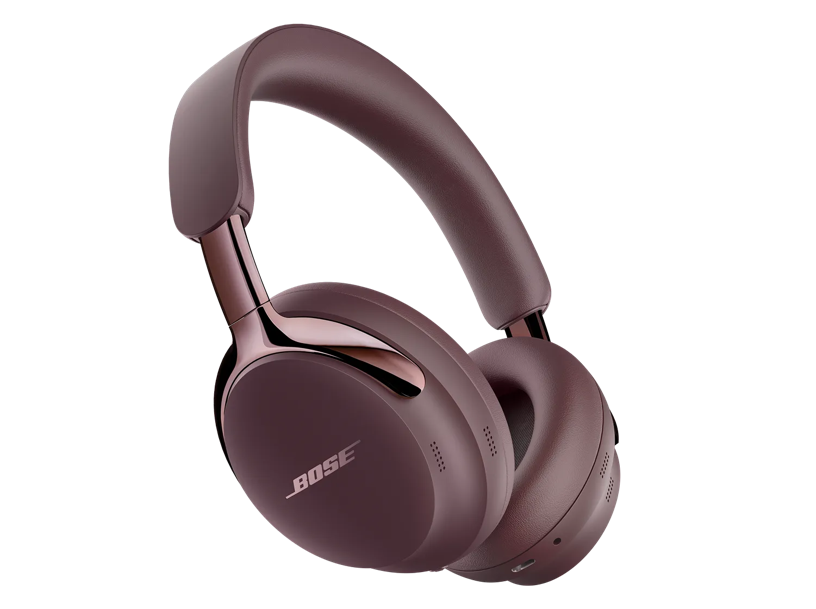
A useful USB-audio option for desk and travel
Bose QuietComfort Ultra Headphones (2nd Gen) is worth considering when you want wireless headphones that also accept digital audio over USB-C. That is a specific, useful capability for a computer-based listening setup. It is a better reason to shortlist the product than assuming a premium model name guarantees the best comfort or noise cancellation.
Research checked on 4 October 2026 covers the second-generation over-ear headphones, not the similarly named earbuds or first-generation model. DelaTechHQ has not physically tested them. Sound quality, microphone performance and fit remain unmeasured.
Documented specifications
- Over-ear headphones with active noise cancellation and an Aware mode.
- Bluetooth 5.4 and multipoint connectivity.
- USB-C digital audio and an included 3.5mm-to-2.5mm analogue cable.
- USB audio supports 16-bit signals at 44.1kHz or 48kHz, according to Bose.
- Manufacturer battery claim: up to 30 hours; Immersive Audio changes the available runtime.
- Bose app for settings and personalization.
See the official product page and FAQs, launch explanation and owner's guide. The product name must include “2nd Gen” when comparing a seller's listing.
Build, fit and everyday operation
The supplied carry case and folding storage instructions support a travel-oriented use case. They do not tell us whether the cushions remain comfortable with your glasses or whether the fit suits your head. Comfort is personal enough that a brief trial can change the decision even when the feature list looks right.
The app is part of the settings workflow, including managing multipoint. Check that you are comfortable installing and maintaining it on your intended phone. Updating firmware may change available options, so this review does not promise a fixed set of future features from the launch announcement alone.
USB-C is the practical differentiator
The headphones accept digital audio over a USB-C cable from a suitable source. This can simplify a desk setup when you would otherwise need a separate analogue adapter. Bose's documented 16-bit, 44.1/48kHz limits matter: “lossless” should not be stretched into a claim of support for every high-resolution audio format.
USB listening is also distinct from a promise about every conferencing application's microphone routing. If calls are your main use, confirm input selection and behavior with the actual computer and application. A cable that charges a device is not automatically evidence for all possible audio functions.
Analogue listening needs power
The owner's guide states that the headphones must be powered on for the analogue cable to work. If the battery is depleted, an external USB power source is needed. This is a meaningful distinction from Sony's documented passive operation and could decide the purchase for a traveler who wants a battery-independent cable fallback.
The guide also says the analogue cable disables Bluetooth and earcup microphone pickup. Treat it as a listening connection, not an assumed substitute for a wired call headset. Pack the correct cable: the headphone-side connector is 2.5mm, even though the source end is the familiar 3.5mm size.
Wireless features and battery claims
Multipoint permits two active device connections, with one audio source playing at a time according to Bose. That suits a laptop-and-phone routine, but it is not simultaneous mixing. Snapdragon Sound functions require a compatible certified source, so do not count them as universal benefits for every phone.
The up-to-30-hour battery statement is Bose's claim under stated conditions. Immersive Audio uses a different operating mode and affects endurance. We have not run a comparable battery test against Sony, and similar headline figures do not establish a tie in actual use. Personal listening volume and call time should influence how often you plan to charge.
Who should buy it—and the score
4/5: a strong documented option for users who prioritize USB-C listening alongside wireless convenience. The limitations are the need for power during analogue use and the stated USB format ceiling. These are relatively manageable for a desk-based listener, but could be decisive for another buyer. The score does not rank ANC effectiveness, comfort or audio fidelity.
Choose it when a direct USB audio connection solves a real problem. Consider Sony when passive analogue backup matters more. Explore the Sony review, paired comparison, Bose product record and Audio coverage. Manufacturer references are informational and have no added affiliate tracking.
Pros
- Explicit USB-C digital-audio support
- Multipoint for phone-and-computer use
- USB listening while powered from a suitable source
Cons
- Analogue listening requires power
- USB audio has a stated format ceiling
- Advanced wireless features need compatible sources
Verdict
4/5 for desk-based wireless and USB listening: digital input is useful, but analogue power requirements and USB format limits matter.
Alternatives
Consider these competing routes before buying if you need a different platform, budget, or feature set.
Price Comparison
No active retailer offers are available yet.
View Product DetailsWas this assessment helpful to your buying decision?
We aim to make every review clear, evidence-based, and useful. If you have a question or spot something we should improve, you can contact our editors below.